Smart home technology has become extremely common in recent years. Doorbell cameras, security systems, and smart thermostats are now standard features in many homes — especially in properties that sit vacant for part of the year.
In fact, most of the homes we watch already have them. Well over 90% have cameras installed, the majority have security systems, and a large portion have smart thermostats as well.
These tools are helpful. They provide visibility and alerts that simply didn’t exist a decade ago.
But there’s an important distinction homeowners sometimes overlook:
Smart devices can tell you that something is wrong.
They can’t solve the problem.
Technology Alerts — People Respond
The most valuable feature of smart home devices is that they notify homeowners when something unusual happens.
A camera may detect motion at the front door.
A security system might send an alert.
A thermostat might report that the temperature inside the home is rising.
But after the alert arrives, the same question remains:
Who is actually going to go to the house?
If a homeowner is several states away, there’s often no practical way to respond quickly.
That’s where the limitation of technology becomes clear.
A Real Example: Smart Thermostat, Real Problem
In one case, a homeowner noticed through their smart thermostat that the interior temperature of their home had risen to 85 degrees, despite the system being set much lower.
They contacted us immediately.
When we arrived, we discovered the HVAC system had shut itself down after the drain line clogged and the drip pan filled with water. The system had done exactly what it was designed to do — shut off to prevent flooding.
But that safety feature also meant the house no longer had climate control.
If left alone, the home would likely have overheated and developed humidity conditions that can lead to mold.
We removed the standing water and coordinated with an HVAC professional to clear the drain line and restore operation.
The thermostat alert worked exactly as intended — but the problem still required someone to physically go to the property and address it.
Cameras Show What’s Happening — Not What To Do About It
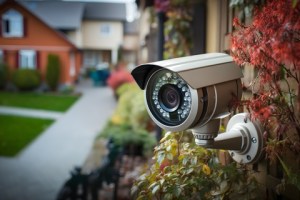
Doorbell cameras and exterior cameras are extremely useful tools. Many homeowners rely on them to monitor activity at their property.
But cameras frequently reveal situations that still require someone on-site to evaluate.
Homeowners often contact us after seeing something unusual on a camera feed:
A package delivered to the wrong house
Solicitation flyers hanging from the front door
Landscaping crews working on the property
Neighbors doing something unexpected near the property line
In one case, a homeowner saw through their camera that a neighbor had begun dumping dirt into the backyard during excavation work. That situation ultimately required documentation, communication with the city, and a resolution process that unfolded over time.
The camera showed the issue. Resolving it required a local presence.
Cameras Can Also Create False Confidence
Another issue that comes up more often than people expect is notification fatigue.
For example, solicitation flyers placed on a front door can trigger motion alerts on a doorbell camera repeatedly as they move in the wind. Homeowners sometimes end up silencing notifications entirely because the alerts become constant.
Ironically, that means the camera is no longer providing useful information at all.
Small issues like this are easy to correct when someone visits the home regularly — adjusting the camera angle, removing the flyer, or changing batteries when needed.
Smart Devices Work Best With Human Oversight
The goal isn’t to criticize technology. Smart home devices are genuinely useful, and most homeowners should have them installed.
But they work best when paired with someone who can respond locally.
Technology provides visibility.
A home watch service provides physical oversight.
When the two are combined, homeowners get the best of both worlds: real-time awareness and someone who can actually step in when something needs attention.
Watching a Home Requires Being There
A vacant home in Florida doesn’t sit still. Weather, humidity, landscaping activity, and everyday wear all continue while the homeowner is away.
Smart devices can provide helpful alerts when something changes.
But protecting a property ultimately requires someone walking the home, observing the details, and making the right decision when something isn’t right.
Technology can tell you there’s a problem.
Someone still has to show up and deal with it.